

 Image 1 of 1
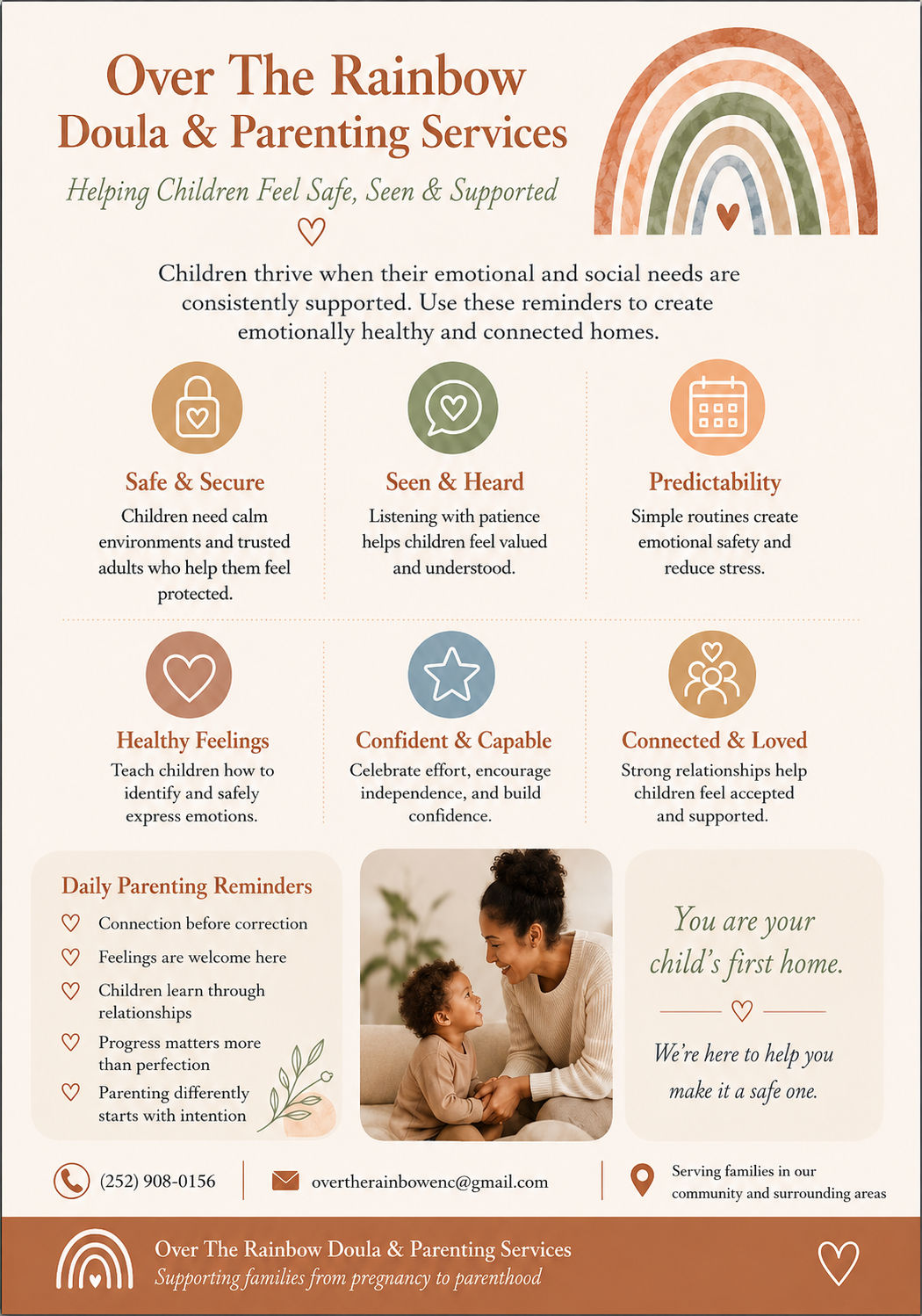
Children’s social and emotional needs are the foundation for healthy development and lifelong well-being. Young children need safe, responsive relationships that help them learn to name and manage feelings, solve problems, and connect with others. They thrive with consistent routines, clear boundaries, and adults who model empathy, calm, and respectful communication. Opportunities to play, cooperate, and practice turn-taking build social skills, while encouragement and attention foster self-esteem and resilience. Meeting these needs means listening without judgment, validating emotions, and guiding children through challenges with patience and predictable support—so they grow confident, compassionate, and ready to learn.
Children’s social and emotional needs are the foundation for healthy development and lifelong well-being. Young children need safe, responsive relationships that help them learn to name and manage feelings, solve problems, and connect with others. They thrive with consistent routines, clear boundaries, and adults who model empathy, calm, and respectful communication. Opportunities to play, cooperate, and practice turn-taking build social skills, while encouragement and attention foster self-esteem and resilience. Meeting these needs means listening without judgment, validating emotions, and guiding children through challenges with patience and predictable support—so they grow confident, compassionate, and ready to learn.